Our plan was to hang out in Rome for a few days, then head to our new hometown—somewhere south of the city, about halfway between Rome and Naples. A month before we left, we booked an apartment through a site called Homelidays.com (kind of like pre-Airbnb, but sketchier and with fewer photos). Most of it was in Italian so we used the new Google feature (really!) to translate most of the advertisements.
We had a few must-haves: Since we’d be living without a car, we needed shops, markets, and a bank close enough to walk to. We also wanted two bedrooms and, if we got lucky, maybe even a terrace. But most importantly, we had to have Wi-Fi. Dad and I were still trying to get Doorcorner.com off the ground, and there was no way we could make that work on dial-up from 1997. And you’d be shocked how many apartments in Italy at that time were still proudly advertising “Internet Access”… only for it to turn out to be dial-up. Nope.
We finally found a listing that claimed to have wired internet—and even described it as “pretty fast.” (Which felt a bit like someone saying they’re “pretty good” at karaoke: optimistic, but unproven.) Still, pretty fast was going to have to do—most other places weren’t exactly flaunting those kinds of accolades.
Other than that, we were game for anything: big city, small town, hilltop, beachside—whatever. We expected everything to be smaller than what we were used to in the U.S.—kitchens, closets, elevators, showers, maybe even beds—and that was fine. We’d watched a ton of House Hunters International (it was a new show back then) and were always amazed at how rude Americans could be about the size of everything. We vowed not to be those people. We were moving for a change—and that included smaller closets, tinier showers, and yes, possibly shorter narrower beds.
Booking a place sight unseen was definitely a leap of faith, but Google Maps had just introduced the “man on the street” feature, which meant we could drop a little yellow guy on the map and take virtual strolls around potential neighborhoods. Very high-tech for the time. We “walked” around a few blocks, spotted some markets nearby, and figured hey—it looked cute enough.
Honestly, if I told you we spent over 100 hours scrolling through listings, arguing over tile floors, and analyzing suspiciously cropped kitchen photos, I wouldn’t be exaggerating. Eventually, we landed on a place near a town we had never heard of: Minturno. Specifically, in a little seaside spot called Scauri.
But here’s the kicker: the apartment was about 100 meters (a block and a half!) from the Mediterranean Sea, and just a 1.5-hour train ride to Rome, 30 minutes north of Naples. We figured, what the hell—how bad can it be for a month?
So we booked it. Sight unseen. Just another leap of faith in this wild European experiment.
Is It Really About the Journey?
Getting to our charming little seaside escape? A full-blown odyssey.
The instructions sounded simple enough: take the train from Rome about an hour south to the Minturno stop, hop off, and call the woman renting us the apartment—Beatricia—who would then come fetch us.
Easy, right?
Jesus. Christ. It was anything but.
I swear, I could write an entire novel just about the chaos of leaving Rome and trying to get to that apartment. Actually, forget a novel—maybe a tragicomedy miniseries. But for now, I’ll give you the abridged version. Just know that it involved sweat, confusion, at least one near-miss with a moving train, and the distinct feeling that we were starring in our own low-budget travel documentary.
It was a fucking nightmare!
So… we started out in Rome, leaving our dingy, functional, but well-located hotel. We lugged our four massive backpacks—mine and Dad’s now even heavier because I’d tried to repack things so Q could actually carry his—across the street to the main train station, ready to buy tickets for our new life.
We were sweaty, overpacked, slightly delirious, and wildly optimistic.
The station was dirty, smelly, and packed with people. Dad and I took turns guarding you two and our bags, threatening both of you to stay super close. We stood in line at one of the ticket counters, and when we finally got to the desk, we asked about train tickets to Minturno—two adults, two children, one way.
The ticket clerk just stared at us blankly.
We tried in our crappy Italian: “Parla inglese?”
She shook her head. “No.”
We pointed toward the other agents and asked if anyone else spoke English. She looked exasperated, waved her hand, and shooed us away.
Shit.
We spotted a few self-serve kiosks and got in the short line. When we reached the screen, we saw everything was in Italian—but good news: there was a little Union Jack icon. English, finally!
This should be easy now, right?
NOPE.
You pretty much needed a civil engineering degree—or be a cartographer—to understand the labyrinth of train routes on that map. Each line was a different color, snaking off in a zillion directions. Whenever we pressed one that seemed like it might be ours, a whole new screen popped up with even more colorful spaghetti and place names we didn’t recognize.
After many, many minutes, a lot of muttered swear words, and some good old-fashioned marital bickering, this old man tentatively approached us. He was short and plump, with a sweet smile. His clothes were worn and overdue for a wash, and he was… a bit smelly. But his broken English was music to our ears.
He kindly offered to help with the kiosk, and we practically melted with relief. His cute, stubby little fingers mashed around on the screen until a crude map of Italy popped up, crowded with dizzying train lines. He traced the route for us, showed us the way to Minturno—and we were thrilled. Elated, really.
Then came the twist:
He wouldn’t print the tickets until we gave him 20 euros.
Not for the tickets—for him.
He was a hustler.
At first we refused. But then he threatened to delete everything he’d just done if we didn’t pay up. We were completely at his mercy. Defeated, we handed over one of our precious €20 bills. It felt like losing a million dollars—we were so tight on money.
But the tickets printed. And the dirty little man—who had seemed so endearing just moments before—shuffled off with our money, stuffing the bills into the pocket of his grimy jacket with his stubby, filthy hands.
Hopefully, finally, to go get a damn shower.
The Journey…
Dad and I had not taken any trains on our European trip a few years earlier, so all I had to go on was movies. And let’s just say… I got a little carried away.
I pictured rich red velvet seats, polished mahogany tables, and the faint clink of fine china as a perfectly pressed waitress (are they even called that on trains?) floated over with a silver tray of tea, miniature cakes, and dainty little sandwiches with the crusts cut off. Maybe we’d have our own cozy wooden compartment with a sliding door, where we could play backgammon like aristocrats while the Italian countryside blurred by outside.
Basically, I thought we were boarding the Orient Express… or that I was a duchess in 1930s Vienna… or even a character in Harry Potter.
Yeah.
The train was none of those things.
There was no velvet. No wood paneling. No tea service. Not even a functioning bathroom door. It smelled like piss and old blue-cheese sandwiches, and the only thing that got served was disappointment with a side of regret.
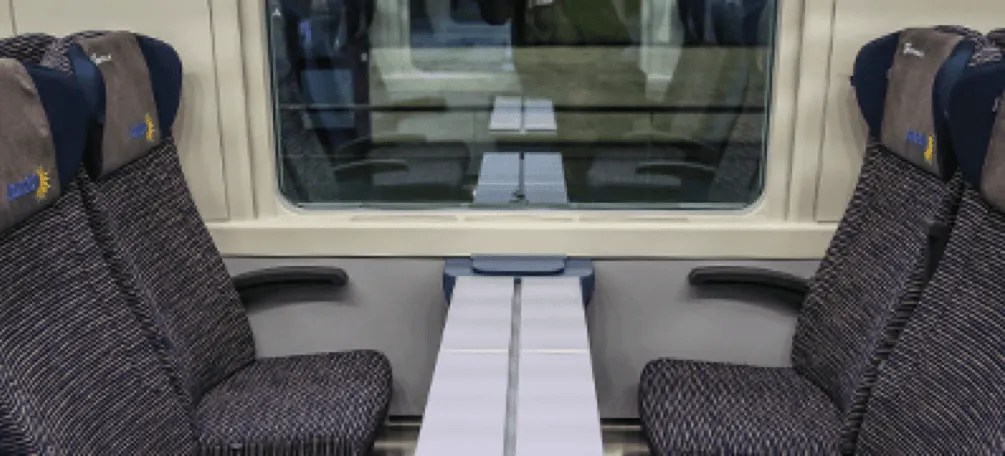
We lugged our bags onto what can only be described as a metal cage on wheels- basically a boxcar with graffiti-covered walls and hot, sticky cloth seats that felt like they hadn’t been cleaned since 1983.
You two grabbed a spot in a four-person section, facing each other—no mahogany table in sight, sadly—while Dad and I tried to wrangle the bags into the overhead rack and the “overflow” rack located near the train doors. To the horror of the Italians already seated, we spent the first 15 minutes of the ride stumbling and swaying as the train sped down the tracks, trying not to fall over while cramming our oversized, overstuffed American luggage into a storage space clearly designed for sensible European briefcases.
It was a full-body workout, a minor public spectacle, and—let’s be honest—the most “American tourist” moment we could possibly have had.
Definitely not the chic, cappuccino-sipping European elegance we were going for.
There was a young couple—probably in their early twenties—who kept their eyes on us almost the entire time. This was before the smartphone epidemic, back when people actually lifted their chins and looked around in public. So instead of scrolling, they watched us—struggling with our bags, shuffling through papers, clearly out of our depth.
They basically stared as we collapsed into our not-so-fancy four-person table. We pulled out the crude, pixelated map the hustler had printed for us along with our tickets and tried to make sense of where we were supposed to get off.
After a few minutes of murmuring between ourselves, the young man leaned over and asked in very broken English, “Minturno?”
We said, “Yes!”
He nodded and rattled off a series of names—none of which sounded even vaguely familiar to us—while karate-chopping the air to indicate each stop in sequence. At the end, he said “Minturno” again, and we realized: he was listing the train stations in order.
We did the universal motion—swirling a finger in a circle—to ask him to repeat it. He smiled and did it again, a little slower this time, hands still slicing the air like he was hosting a martial arts demonstration.
By the third round, Dad had joined in, enthusiastically repeating the station names right alongside him—completely butchering the pronunciation, of course.
A few stops before Minturno, the young couple stood to get off. Just before reaching the door, the guy turned back, caught our eyes, and repeated the last three station names—blah, blah, and, Minturno! Like a well-rehearsed choir, we all said “Minturno!” in unison.
We thanked him, they waved, and off they went.
During the ride, Dad and I had been paying close attention to how things worked. A pattern had emerged: a few minutes before each stop, people would quietly get up and drift toward the doors. The train would squeal—literally shriek—to a stop. The doors would snap open, passengers would disembark down a few steep steps onto the platform, new passengers would hop on, tuck away their adorable little attaché cases, and take a seat. Then—without warning—a sharp referee-style whistle would sound from somewhere outside (why? that would become clear later), the doors would slam shut, and the train would rocket out of the station.
It was fast. Not just the train—the whole process. Blink-and-you-miss-it fast.
And we had two adults, two little kids, four massive bags and two rolly bags.
That’s when Dad started to stress. And when Dad stresses, he plans. Like…military-ops-style plans.
He turned to us and laid it out like a tactical briefing.
“H, grab this bag and Q’s hand. Get off the train and stand still. Hold your brother’s hand. Do not let go. Do not move. Stay put. Got it?”
I’d be right behind you two with another bag—Dad had assigned me the blue one since it was closest and easy to grab. That way, I could get it quickly and get to both of you fast. Once on the platform, I was the catcher. Dad was the tosser—he’d be lobbing or passing the rest of the bags down to me like it was a high-stakes supply drop.
He even gave us the exact order the bags would come off.
“If the whistle blows and we’re not done,” he said, “I stay on with the bags. I’ll find my way back. You guys stick together, have each other’s backs, and don’t lose sight of the goal. Check your six. Stay strong.”
Okay, it wasn’t that dramatic… but it was pretty intense.
Looking back, it honestly felt like we were running drills for an F1 pit crew. Only sweatier. And with way more emotional baggage—literal and otherwise.
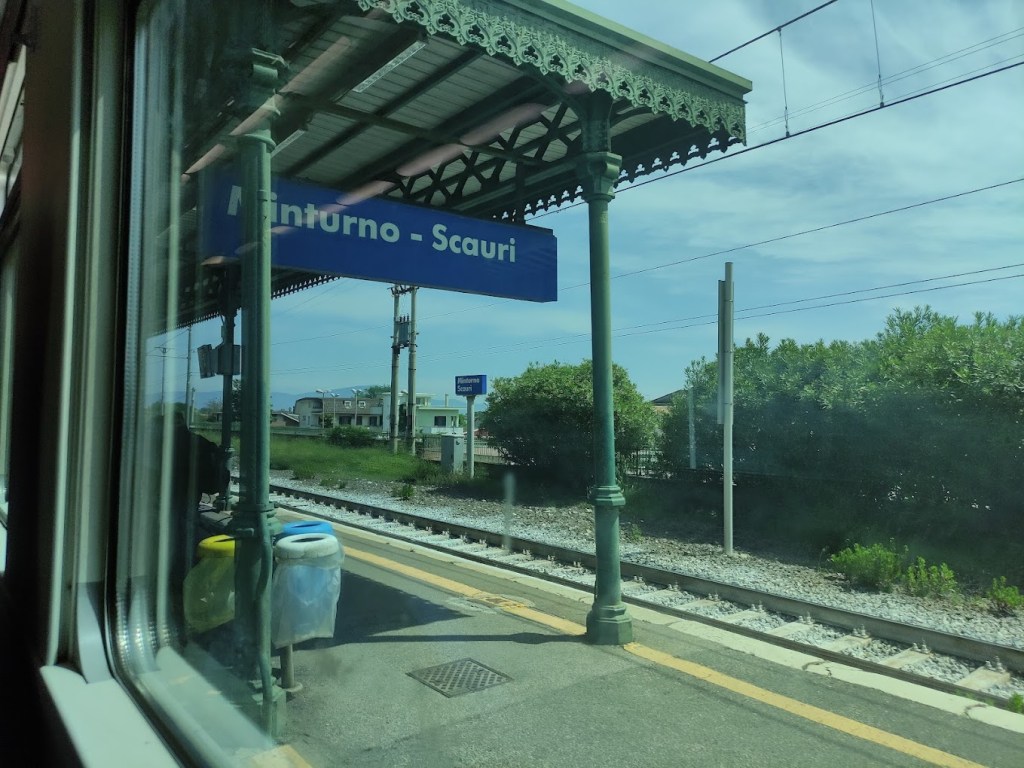
The Arrival…Finally, it was time to depart our little train ride. As we approached the Minturno station, we watched a blur of houses whip by the windows. Then—there it was: the unmistakable white signs with MINTURNO spelled out in bold black letters.
We were almost there.
Dad gave us one last pep talk, and we launched into our extraction exercise.
You two did great—hustling off the train, hand in hand, with H carrying one of the smaller bags like a little pro. Dad and I sprang into action with our chaotic toss-and-catch routine on the platform. It all happened fast—like muscle memory from a drill we’d practiced a hundred times (even though we hadn’t). In what felt like record time, Dad grabbed the final massive bag and jumped off the train.
And just as his feet hit the cement—
PHWEEEEEET!
The whistle blew.
It was only then that I realized… it was an actual person blowing the whistle. Just a guy in a vest, signaling that the train was cleared and ready to go.
We didn’t need to be so dramatic with our bag extraction after all.
But at that point, we had basically executed a full-blown military operation—so, no regrets.
We had made it to our destination…but this wild ride was not yet over! Not even close…
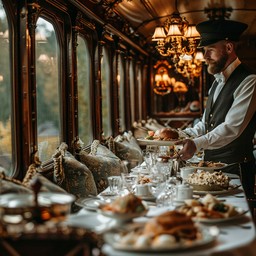
What I had envisioned…

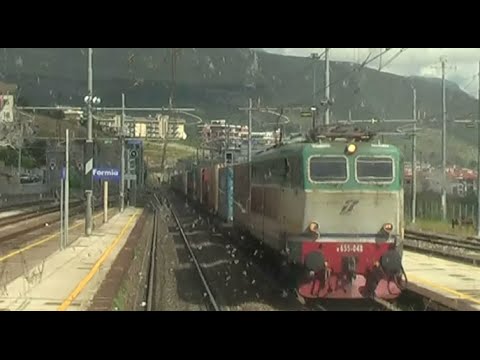
Vs. The Reality…


 4inworld - Quitting Suburban Life for the Unknown
Leave a comment